Installation for Dutch Design Week 2025
Creating an interactive installation “Mutual Imprint” for the festival “Dutch Design Week” dedicated to the importance of human connection.
Event

- Concept Creator
- Interaction Designer
- Visual Design & Art Direction
My Role
- Concept Development
- Interaction Flow
- Visual Prototypes
- Installation Setup
Deliverables
- From: February 2025
- To: October 2025
Timeline
About Project
“Mutual Imprint” was developed as part of “Human Zoo”, a collaborative research project from Fontys University exploring the boundaries between physical and digital identity. The installation was presented during Dutch Design Week 2025 in Eindhoven — one of Europe’s largest design festivals, annually showcasing innovation, experimentation, and the future of design.
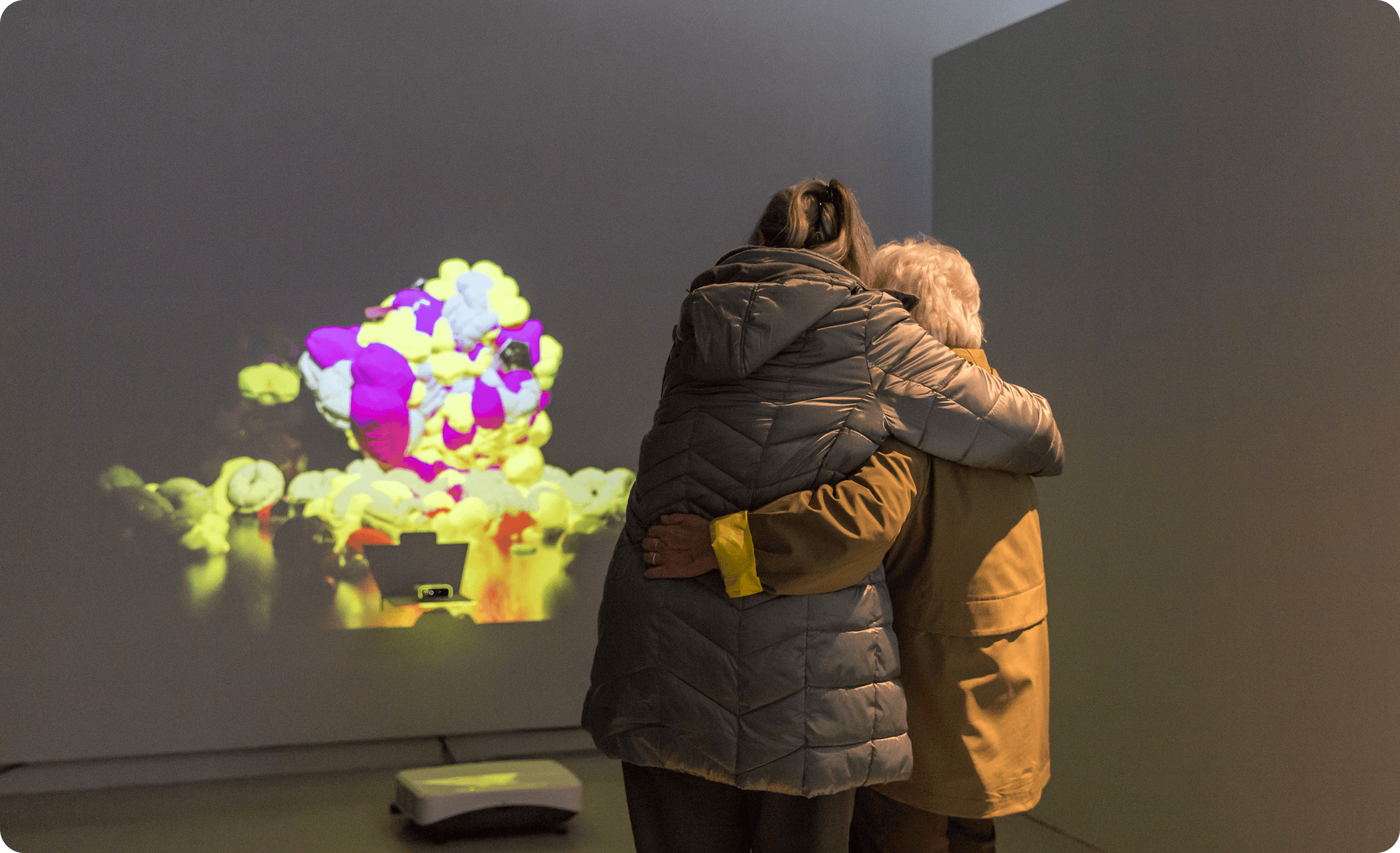
In an age of isolation and division, “Mutual Imprint” installation invites people to reconnect through one of the most fundamental human gestures — a hug. When two participants embrace, they create a shared digital imprint — an amorphous shape formed in a soft digital “fabric” that echoes their moment of contact. Through light, movement, and tactile interaction, the installation celebrates the beauty of closeness and the emotional traces we leave on each other.
Creating a Concept
The idea was developed by me through research and reflection on the senses I wanted people to experience within the installation.My main goal was to create an experience that people could immediately feel — an encounter that leaves a quiet emotional impact even after participation.
I started thinking about human connection and how relationships affect us, especially in times when closeness often feels distant. From this reflection, a simple human gesture became the foundation — a hug, reimagined in a digital context. I wanted to show how support and connection with another person can transform us, leaving emotional traces that linger beyond the moment itself.
I explored different visual directions for expressing human connection and the emotional energy behind a hug.To capture its subtlety, I experimented with various visual metaphors and materials — from chameleon-like color transitions that reflect two people blending together, to furry and tactile textures that respond to movement, and symbiotic organic forms inspired by nature.
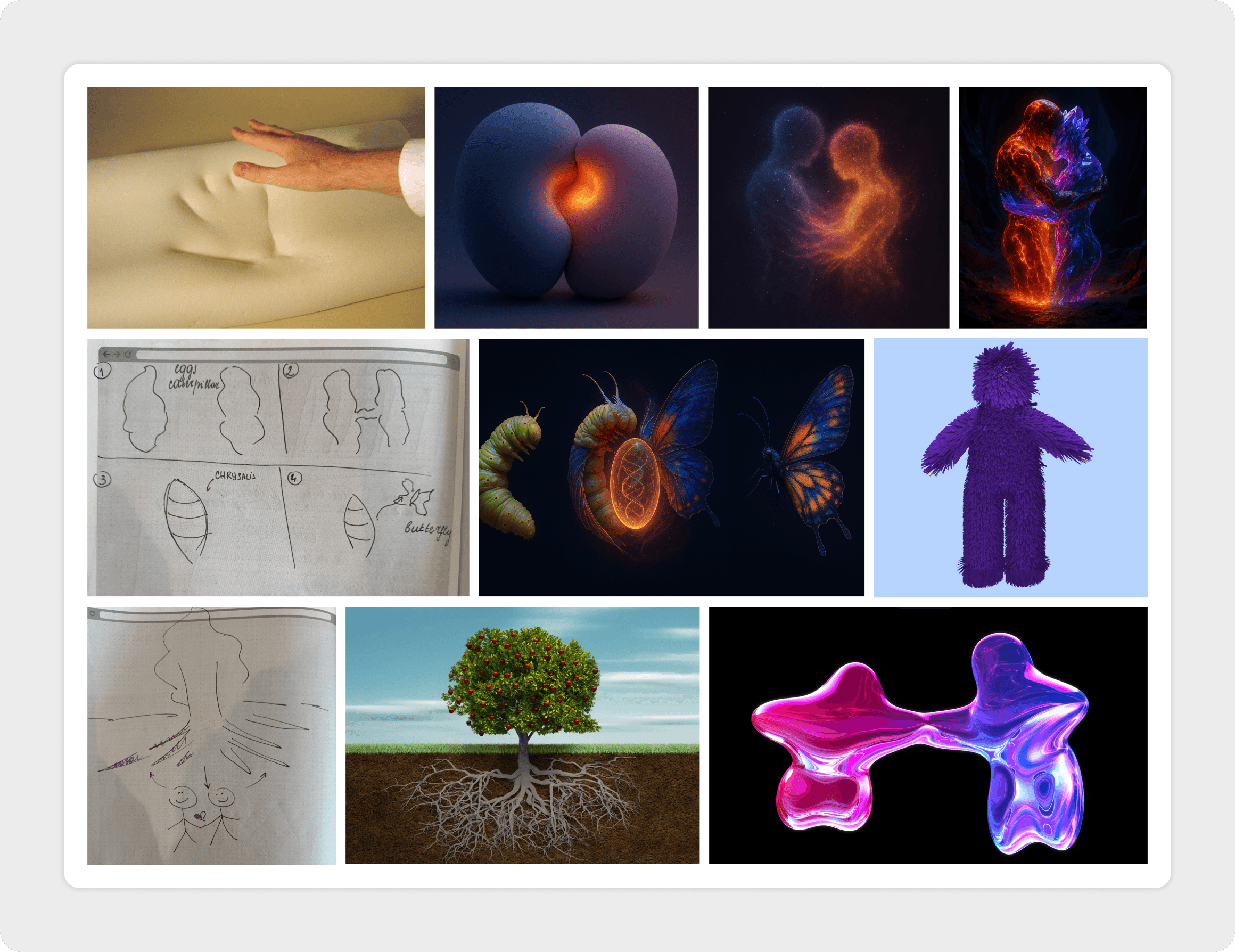
Through these explorations, I aimed to find a visual language that could convey both softness and transformation — the way people influence and reshape each other through touch. This process eventually led me to focus on soft, shape-shifting forms that deform and slowly recover after contact, symbolizing how emotional connection leaves a trace that gently fades but never fully disappears
Material & Form Research
After defining the visual direction, I explored how different materials could express the emotional qualities of a hug. I researched and prototyped materials that react to touch — from soft fabrics and translucent gels to heat-reactive and pulsing surfaces. Each option reflected a different aspect of human connection: warmth, vulnerability, resilience, or presence.
Seven concepts were developed as 3D models using the Spline tool, including pillow, soft felt, gel, and heat-reactive surfaces, among others. Explore the 3D models below.
Spline scene is loading...
Interaction Design Exploration
Building on the material research, I focused on designing the touchpoint — the moment when two entities meet and interact. The goal was to translate emotional connection into a visual and tactile experience that feels warm, soft, and alive.
I explored several variations of how the entities could behave at the moment of contact, using materials such as soft felt, gel/glue, and heat-reactive surfaces, which were selected as favorites in the previous iteration by me and the project stakeholders.
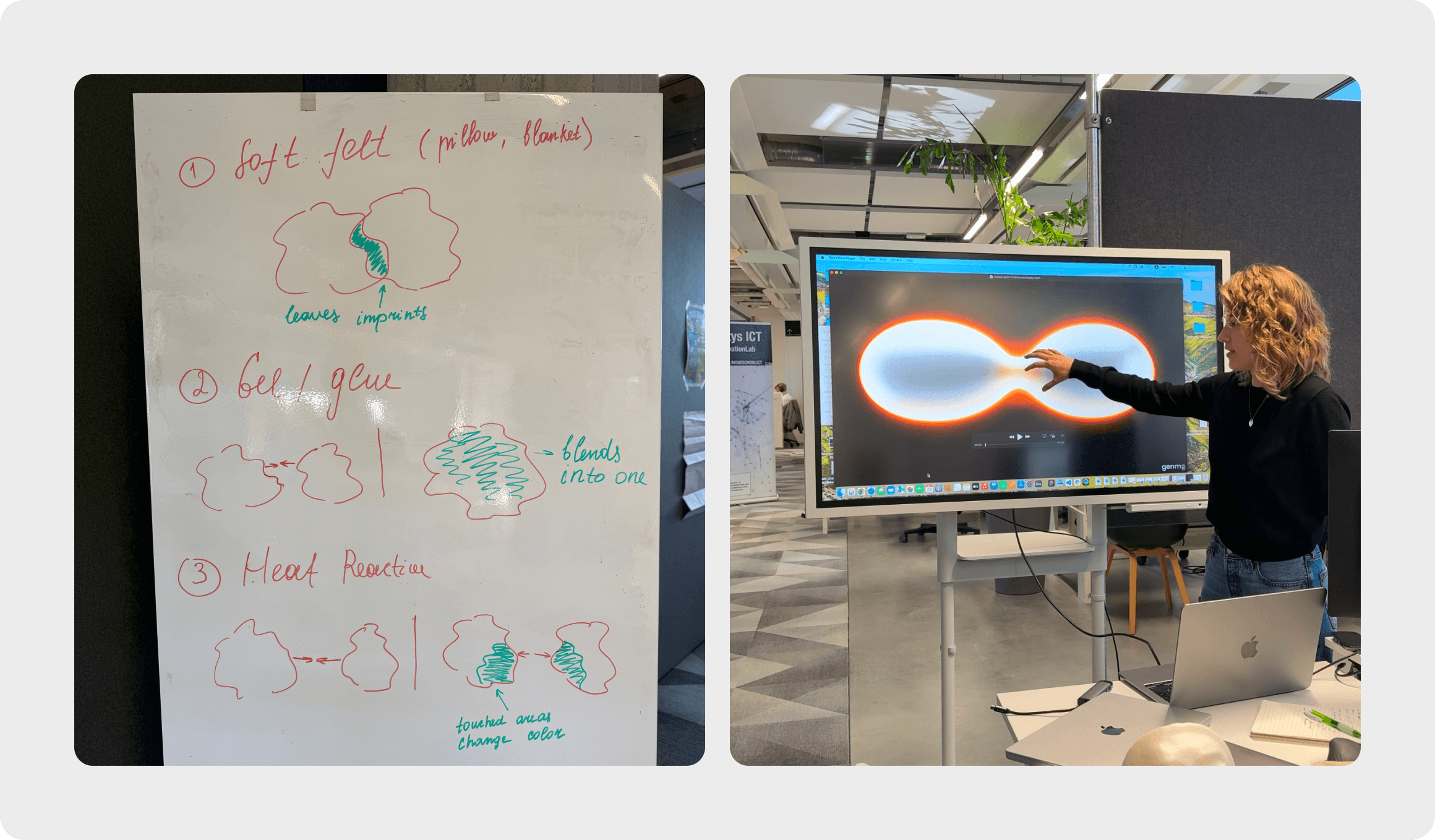
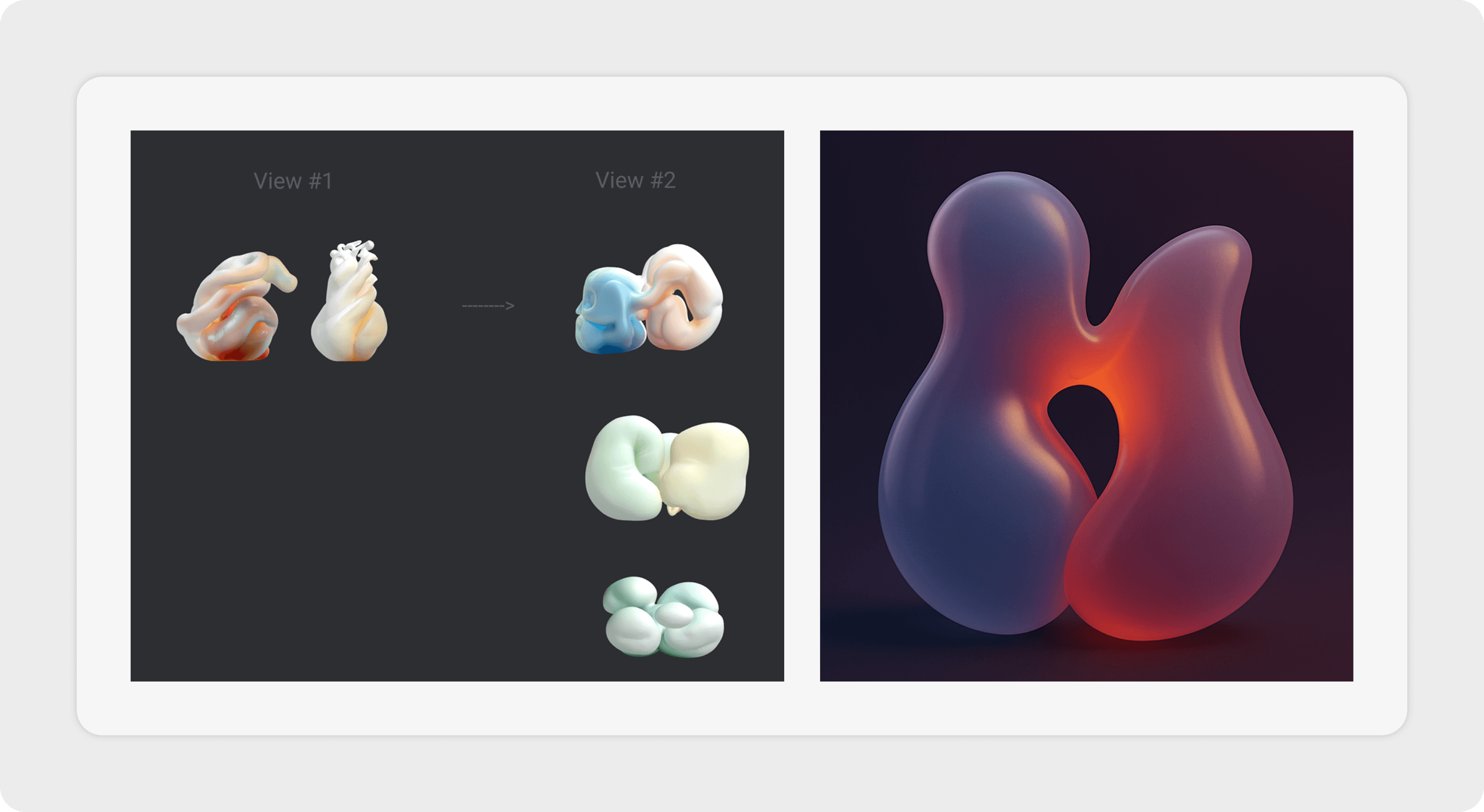
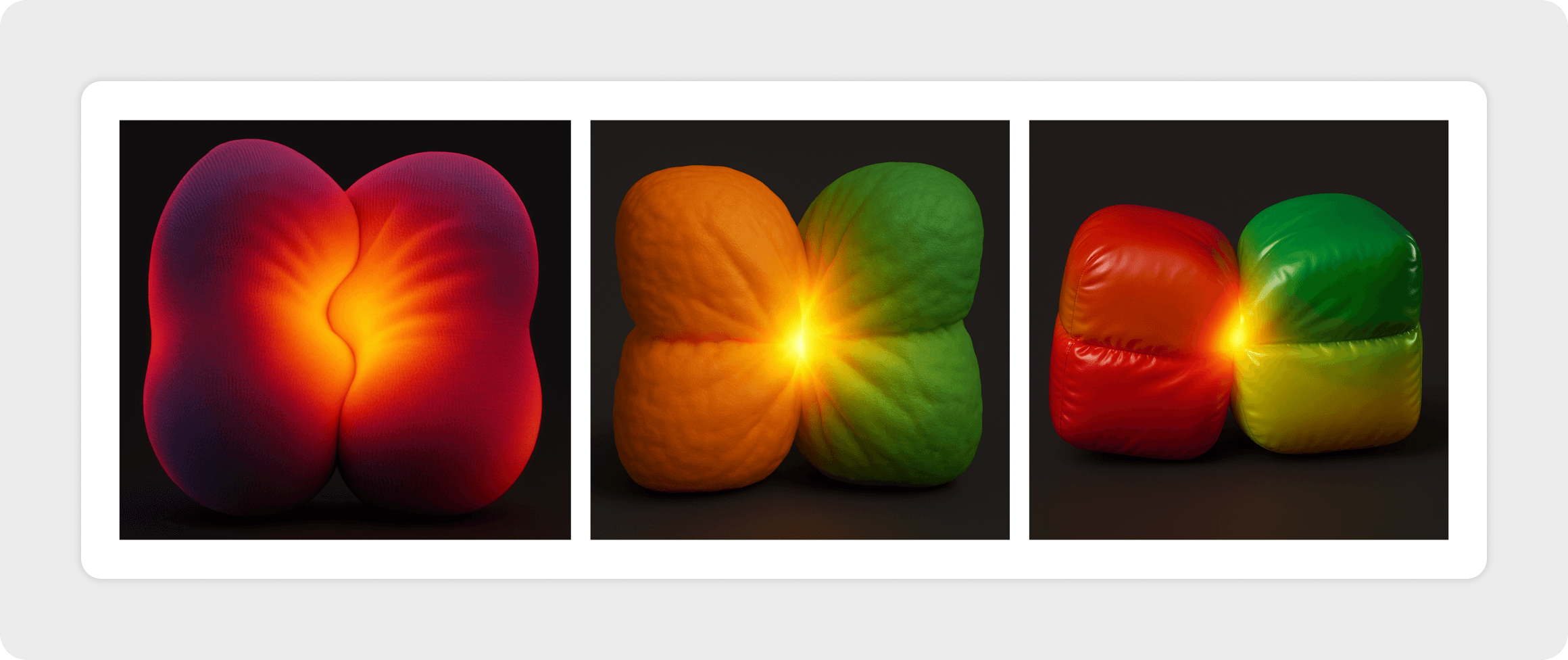
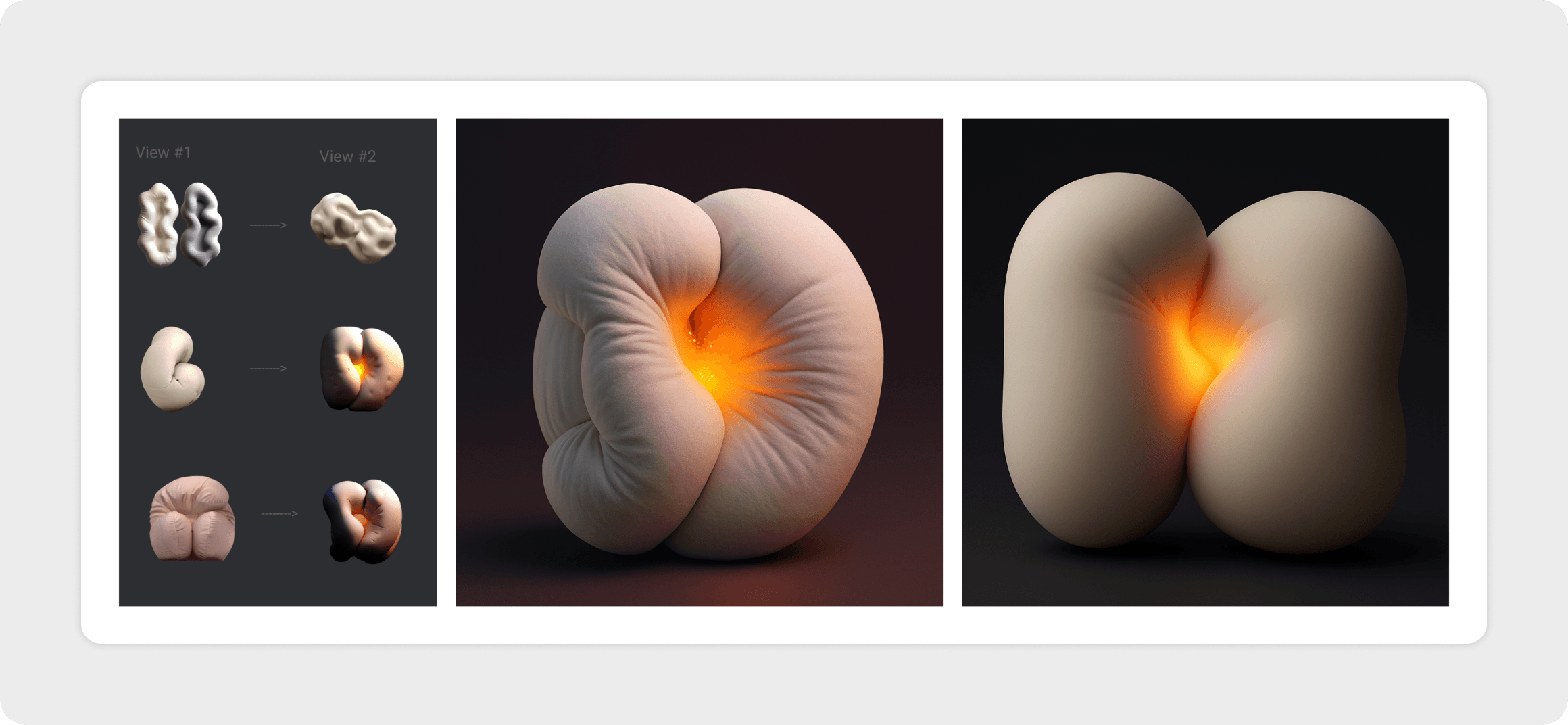
Using the Spline tool and AI-generated visuals, I developed 3D models and variations to visualize these behaviors from multiple perspectives. Each approach represented a different emotional quality.
Gel/Glue blended smoothly at the contact point, showing unity and the fusion of two energies.
Heat-Reactive surfaces changed color with touch, capturing the warmth and energy exchanged between people.
Soft Felt left gentle imprints highlighted by subtle lighting and gradients, symbolizing care and tenderness. After this iteration, the project team and I agreed to use Soft Felt as the final concept, as its distinctive qualities supported both the visual direction and the emotional message of the installation.
Designing the Hug Animation
At this stage, my goal was to bring the hug to life — transforming a static visual into an expressive, moving interaction that communicates warmth and connection. This phase focused on visualizing one of the main actions of the installation while also documenting the movement to guide the development team.
I explored how the imprint could appear, react to touch, and gently fade over time, balancing technical feasibility with emotional expression. To achieve this, I approached the process from both technical and design perspectives.
I created early motion sketches in p5.js to explore the rhythm, timing, and emotional pacing of a hug.Later, I developed 3D animation studies in Three.js and Spline to test how soft forms deform, meet, and separate — translating the logic of physical interaction into real-time motion.
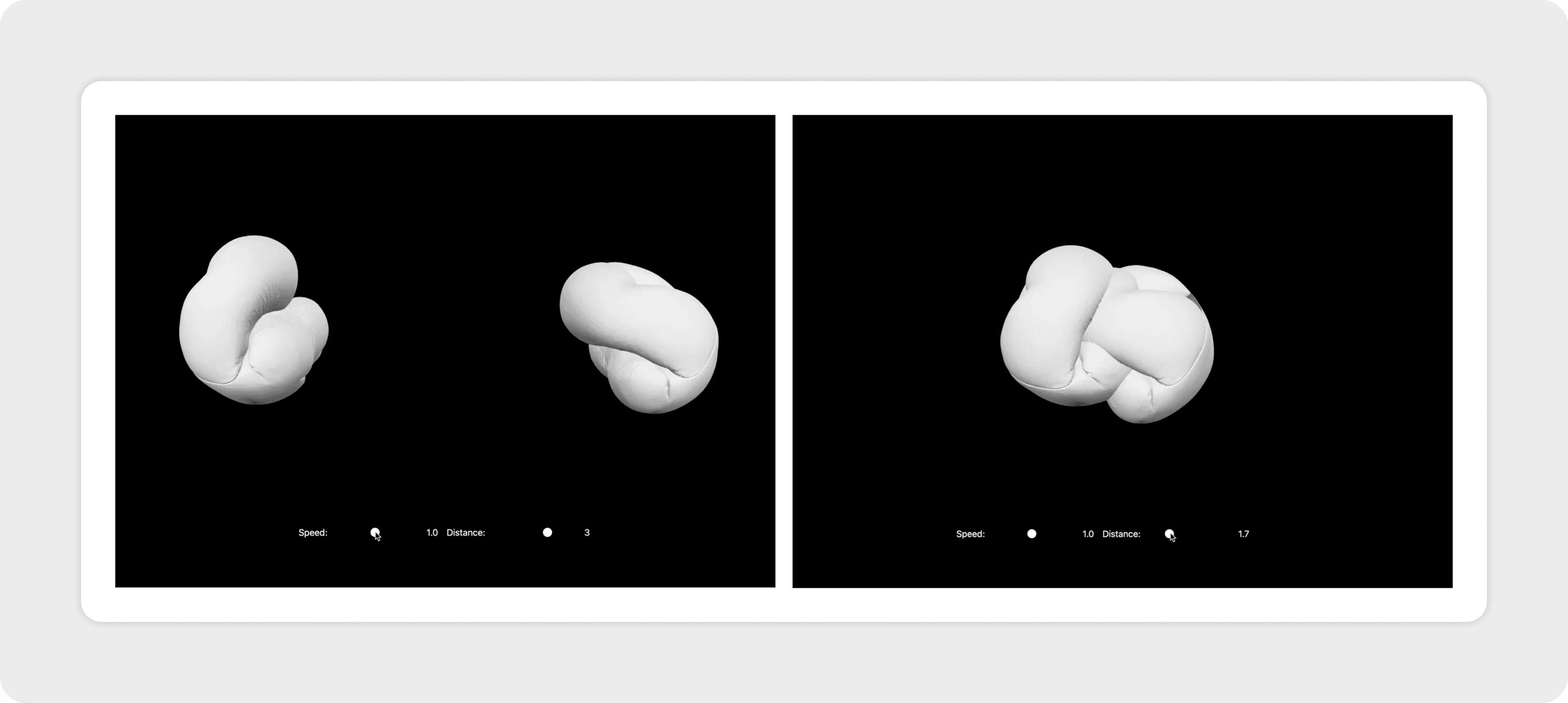
In parallel, I experimented with real-life materials, using pillows to observe how soft objects press, compress, and slowly return to shape. These observations helped capture realistic movement and emotional nuance in the digital version.
To further visualize the softness and flow of interaction, I generated AI-based video explorations, which provided emotional and visual references for the final animation vision. This process created a clear visual foundation and a strong prototype flow for delivering my design insights to the project developers.
Installation Set Up Design
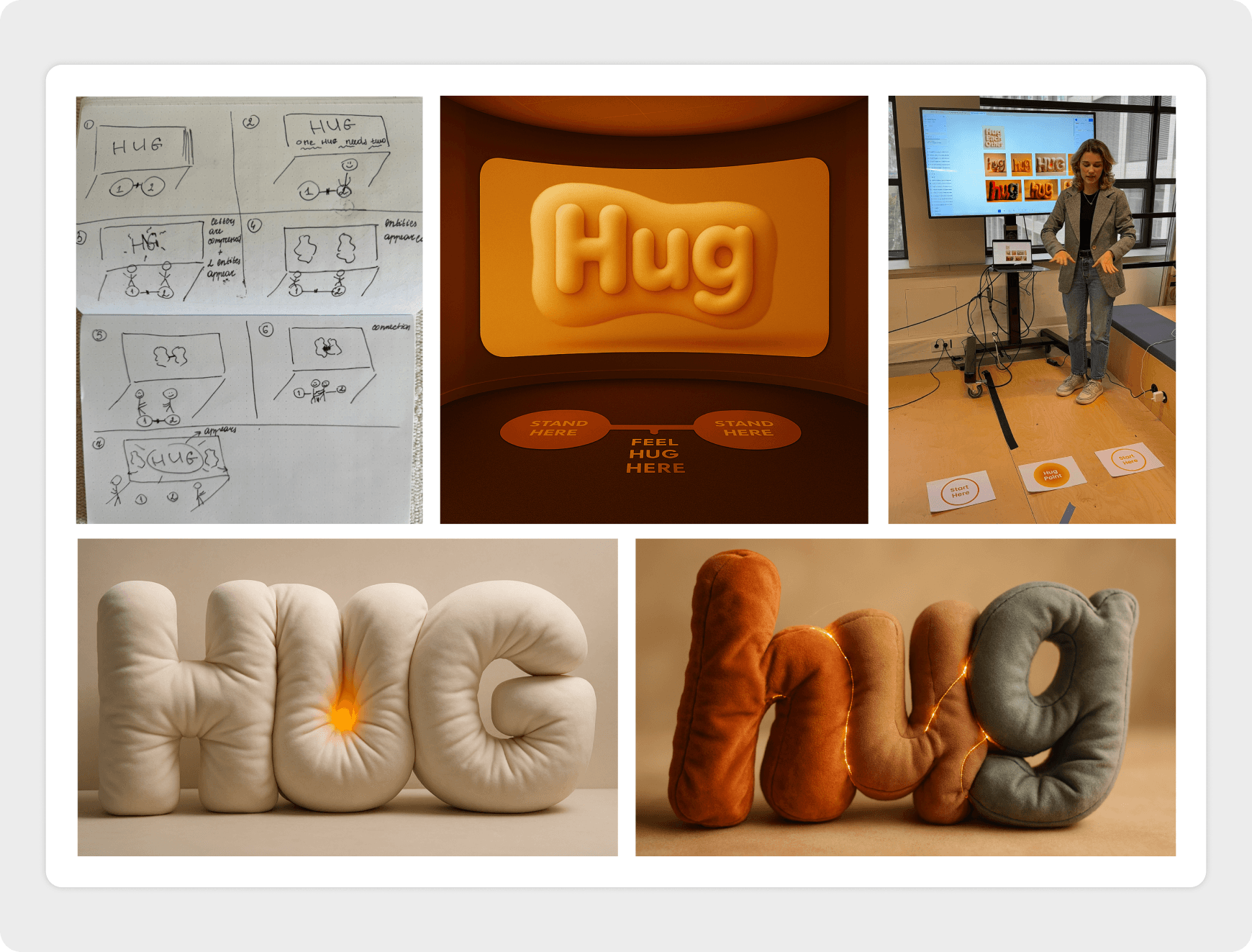
Also during this project, I was responsible for the general setup of the installation. I conducted research to identify what spatial and visual elements could make the user experience intuitive, emotional, and pleasant. My goal was to guide visitors naturally through the interaction, from curiosity to participation - without the need for verbal instruction.
To achieve this, I:
Researched existing interactive installations to understand how minimal guidance and clear visual feedback can drive intuitive user behavior.
Defined the installation flow from the idle state to the moment of the hug and back to rest, ensuring each stage felt natural and emotionally progressive.
Designed spatial cues, such as two soft floor circles connected by light, and a large, softly breathing “HUG” text on the screen, inviting people to interact.
Final Installation
At Dutch Design Week 2025, the installation came to life. The concept was expanded, presenting two entities on the screen that appeared as metal and stone when standing apart — symbolizing how, when we are alone, we often need to act strong and independent, like stone.
However, when people connected — through a hug or by holding hands — the entities transformed into soft, colorful pillows, representing warmth, vulnerability, and emotional openness.
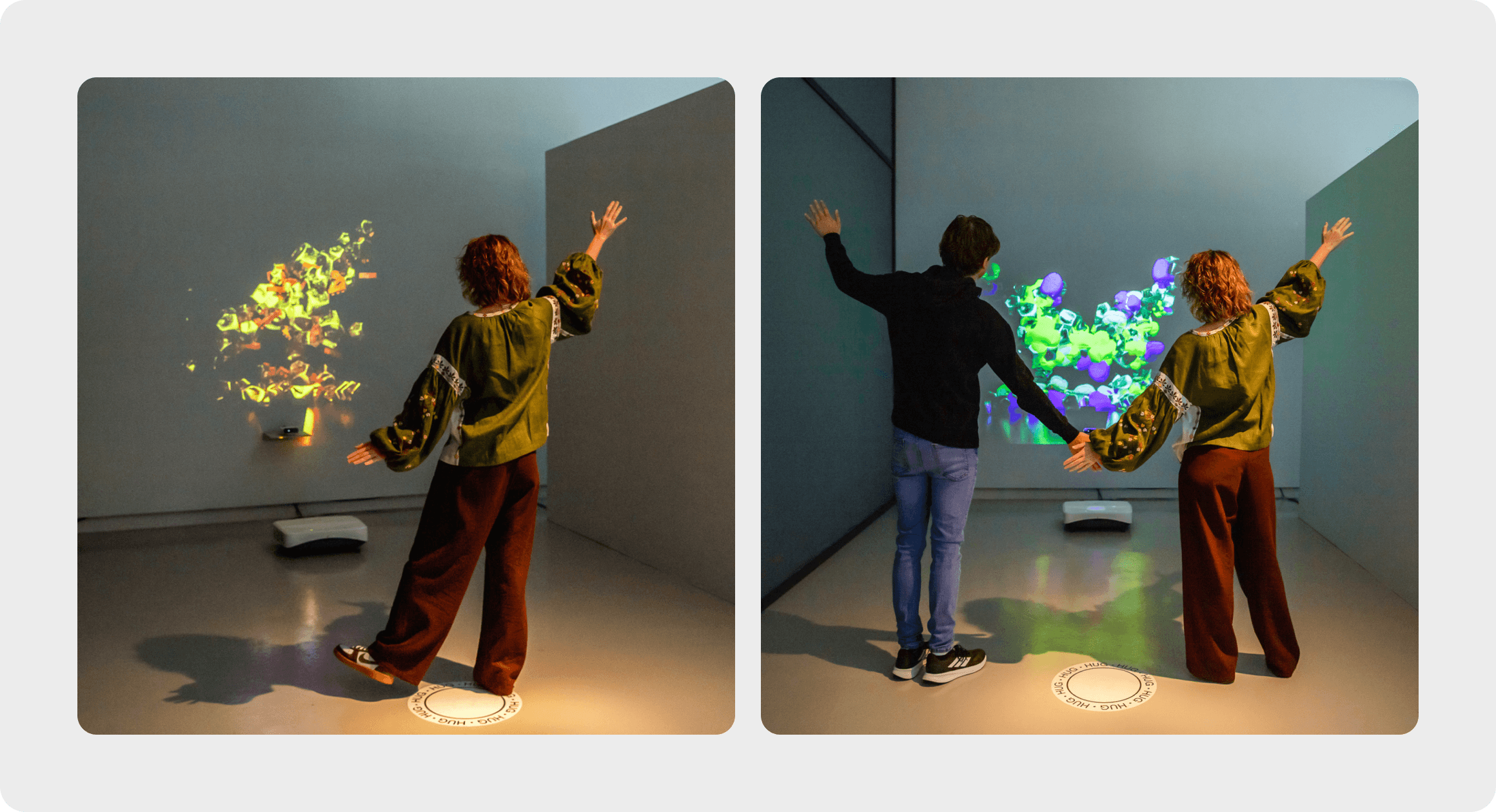
The installation received many positive comments from the public. Visitors shared that the most unique aspect of the experience was feeling real emotion while hugging another person and watching their connection visualized through technology. Many highlighted how the installation made their emotions visible, allowing them to see the transformation of feeling into form.
During Dutch Design Week, Anna performed various tasks in both the conceptual and design aspects. Besides the quality and precision of her work, I particularly appreciated her dedication, commitment, and reliability. She's the kind of person you always want on board.